
Long-Term Results of FLAAK Keratopigmentation
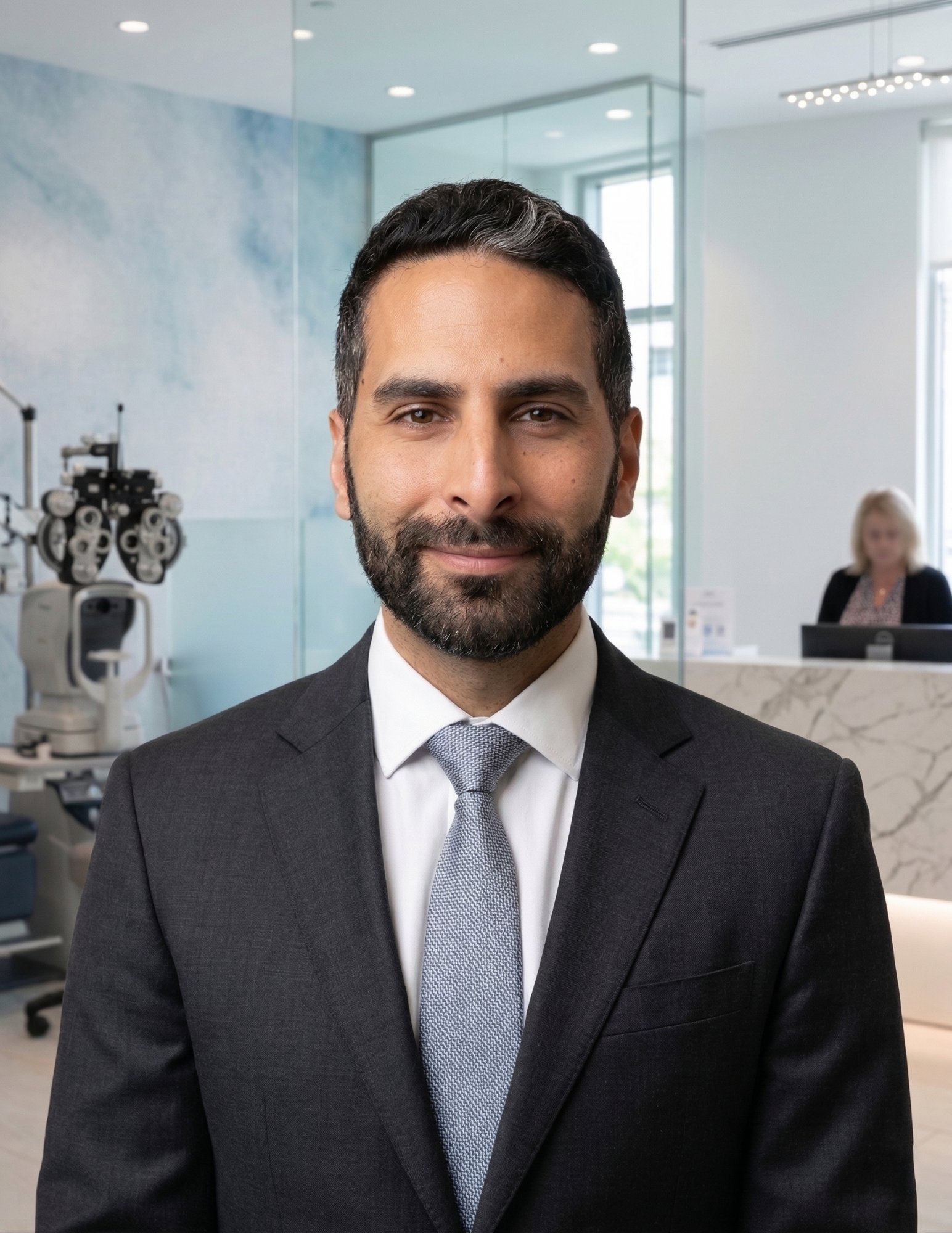
The long-term results of FLAAK keratopigmentation represent the primary concern of any patient considering a permanent eye color change. Will the chosen shade remain identical after five years, ten years, or longer? Yoni Gozlan, M.D., Ophthalmic Surgeon specializing in corneal pigmentation surgery at the Clinique Laser Victor Hugo, Paris 16, now has sufficient clinical follow-up to answer this question with precision. FLAAK keratopigmentation was designed from the outset to deliver a permanent result, thanks to a biocompatible mineral pigment implanted within the thickness of the cornea. This article details how results evolve over time, the biological mechanisms that guarantee keratopigmentation durability, and the recommended follow-up to preserve the quality of the outcome throughout the patient's life.
Understanding Pigment Longevity in FLAAK Keratopigmentation
Before analyzing results year by year, it is essential to understand why FLAAK keratopigmentation was conceived as a procedure intended to be permanent. The principle relies on the implantation of a certified mineral pigment into the corneal stroma—that is, the intermediate layers of the cornea—through a tunnel created with a femtosecond laser. This pigment never comes into contact with the bloodstream or with the intraocular fluid media, which prevents any dispersion or elimination by the body. To fully understand how the procedure is performed, it is helpful to consult the article dedicated to FLAAK keratopigmentation surgery. The keratopigmentation pigment longevity is thus linked to a precise biological phenomenon: intrastromal encapsulation, which permanently isolates the pigment particles within the corneal tissue. This encapsulation mechanism is what makes FLAAK keratopigmentation fundamentally different from superficial cosmetic approaches, ensuring that the pigment remains securely positioned within the stroma for decades. The avascular nature of the cornea further reinforces this stability, as there is no blood flow to carry away or degrade the implanted particles. Understanding these biological principles helps patients appreciate why FLAAK keratopigmentation delivers results that stand the test of time.
Long-Term Results of FLAAK Keratopigmentation: Chronological Evolution
Yoni Gozlan, M.D. follows his operated patients rigorously to document the evolution of the outcome at each postoperative stage. Here is what the clinical data reveal about the long-term results of FLAAK keratopigmentation:
- Results at 6 months: At this stage, the color is considered definitively stabilized. The residual corneal edema from the first few weeks has completely resolved, the cornea has regained its physiological transparency around the pigment, and the perceived shade corresponds to the aesthetic goal set during the consultation. It is at six months that Dr. Gozlan performs a comprehensive assessment to confirm the final result of the FLAAK keratopigmentation procedure.
- Results at 1 year: Published clinical series show no modification of the color between six months and one year. The pigment is perfectly encapsulated, the visual appearance remains strictly identical, and topographic examinations confirm the absence of pigment particle migration. The patient can consider the FLAAK keratopigmentation result as fully established and reliable at this point.
- Results at 5 years — keratopigmentation 5 years: The available data over a five-year follow-up confirm remarkable pigment stability. There is no significant fading, no migration toward the deep or superficial corneal layers, and no modification of the homogeneous color distribution. These results constitute a major milestone in validating keratopigmentation durability and confirm the reliability of the FLAAK keratopigmentation technique over the medium term.
- Results at 10 years and beyond: Clinical follow-up of more than ten years, obtained notably through the first series of patients who underwent the FLAAK protocol, confirms the permanence of the result. The mineral pigment does not degrade over time and remains stable in its intrastromal position, delivering a lasting color without the need for a renewal procedure. This extended data set on FLAAK keratopigmentation provides strong reassurance for prospective patients.
- Overall summary: The long-term results of FLAAK keratopigmentation are now documented with a sufficient level of evidence to affirm that the obtained color is permanent. This permanence fundamentally distinguishes the FLAAK keratopigmentation technique from temporary solutions such as colored contact lenses or cosmetic drops. To discover visual testimonials, consult the article on FLAAK keratopigmentation results.
Why Does the Pigment Remain Stable in FLAAK Keratopigmentation Long Term?
The exceptional stability of the long-term results of FLAAK keratopigmentation is explained by well-identified biological and physicochemical mechanisms. Yoni Gozlan, M.D. systematically details these to his patients during the preoperative consultation before FLAAK keratopigmentation:
- Intrastromal encapsulation: Once implanted in the tunnel created by the femtosecond laser, the pigment is progressively surrounded by keratocytes (corneal stroma cells) that isolate it within a fibrous matrix. This encapsulation phenomenon creates a biological barrier that prevents any pigment dispersion. It is the fundamental mechanism that guarantees the permanence of the FLAAK keratopigmentation result.
- Absence of vascular contact: The cornea is an avascular tissue, meaning it is devoid of blood vessels. The pigment is therefore never exposed to blood flow that could carry it away or degrade it through immune reaction. This anatomical characteristic is a decisive advantage compared to other body areas where injected pigments eventually fade. It is one of the key reasons FLAAK keratopigmentation achieves such lasting outcomes.
- Mineral nature of the pigment: The pigments used in the FLAAK keratopigmentation protocol are of mineral origin and certified biocompatible. Unlike organic pigments that can decompose under the effect of tissue enzymes, mineral pigments maintain their molecular structure indefinitely in a stable biological environment such as the corneal stroma.
- Calibrated implantation depth: The femtosecond laser allows the creation of a tunnel at a precise depth (approximately 50% of corneal thickness), deep enough for the pigment to be protected from external aggressions (UV rays, friction), yet superficial enough to guarantee an optimal aesthetic rendering. This calibrated depth directly contributes to keratopigmentation pigment longevity and is a hallmark of the FLAAK keratopigmentation approach.
- Absence of rapid cellular turnover: Unlike the epidermis, which constantly renews itself, the corneal stroma is a tissue with extremely slow cellular turnover. The keratocytes that encapsulate the pigment are not replaced frequently, which maintains the integrity of the pigment capsule for decades. This slow turnover is another reason FLAAK keratopigmentation results endure over such extended periods.
Factors That May Influence Long-Term Results of FLAAK Keratopigmentation
Although pigment stability is remarkable, certain environmental or medical factors may theoretically influence the quality of the result over the very long term. Yoni Gozlan, M.D. informs each patient of these elements to optimize the permanence of their FLAAK keratopigmentation:
- Excessive UV exposure: Intense and prolonged sun exposure without eye protection is not recommended. UV rays can, over the very long term, modify the corneal stroma structure and, hypothetically, slightly alter the pigment appearance. Wearing sunglasses with UV filters is recommended, as it is for any patient concerned about their ocular health. For a full overview of postoperative recommendations following FLAAK keratopigmentation, consult the article on recovery after FLAAK keratopigmentation.
- Prolonged medication use: Certain long-term treatments, particularly topical or systemic corticosteroids, can modify corneal metabolism. Although no pigment degradation has been documented in this context, enhanced ophthalmic follow-up is advised for patients receiving these treatments to monitor the stability of their FLAAK keratopigmentation outcome.
- Natural corneal aging: The cornea undergoes physiological changes related to aging, including slight thickening or minimal opacification (arcus senilis). These natural phenomena do not affect the position or nature of the pigment but may very slightly modify color perception. It is important to distinguish this natural evolution from pigment instability, which is not observed with FLAAK keratopigmentation. For further details on this topic, the article on color stability of the eye treated with keratopigmentation provides additional clarification.
- Ocular trauma: Severe corneal trauma (contusion, perforating wound) could theoretically disrupt the stromal capsule containing the pigment. These exceptional situations fall under ophthalmologic emergencies and do not call into question the safety of the FLAAK keratopigmentation technique under normal conditions.
The Question of Touch-Up After FLAAK Keratopigmentation
Even though the long-term results of FLAAK keratopigmentation are stable, a minor touch-up may be offered several years after the initial procedure. This is not a mandatory renewal but an optional possibility:
- Color intensification: Some patients wish, after several years, to slightly revive the intensity of their color obtained through FLAAK keratopigmentation. This request can be fulfilled through a targeted touch-up, performed using the same laser protocol, without increased risk. Dr. Gozlan evaluates each case individually to determine the relevance and feasibility of this touch-up.
- Shade homogenization: In very rare cases, a slight heterogeneity in pigment distribution may appear over time, generally imperceptible to the naked eye but detectable during biomicroscopic examination. A localized touch-up allows correction of this micro-variation and restoration of perfect homogeneity in the FLAAK keratopigmentation result.
- Evolving aesthetic preferences: The patient may simply wish to nuance their color after several years. The FLAAK keratopigmentation protocol, thanks to the diversity of its pigments, allows shade adjustment while preserving the integrity of the initial result. Discover the available options in the article on colors chosen in FLAAK keratopigmentation.
Keratopigmentation Follow-Up: The Recommended Annual Check-Up
Keratopigmentation follow-up is a fundamental element in guaranteeing the quality of results over time. Yoni Gozlan, M.D. recommends an annual ophthalmic check-up that includes a slit-lamp examination to verify the integrity of the pigment and the cornea, a visual acuity measurement, tonometry (intraocular pressure measurement), and a fundus examination. This regular follow-up does not aim to treat a specific problem related to FLAAK keratopigmentation but rather to form part of an overall ocular health approach, as is recommended for any adult. It also allows documentation of result stability and reassures the patient regarding the permanence of their color achieved through FLAAK keratopigmentation. Patients who undergo this regular keratopigmentation follow-up protocol benefit from the ongoing expertise and personalized attention that Dr. Gozlan provides at the Clinique Laser Victor Hugo.
FLAAK Keratopigmentation Versus Temporary Solutions: Durability in Question
The question of keratopigmentation durability takes on its full significance when compared to the alternatives available on the market. Understanding why FLAAK keratopigmentation outperforms these alternatives is important for any prospective patient:
- Colored contact lenses: They require rigorous daily maintenance, regular replacement (daily, monthly, or annually depending on the type), and carry risks of corneal infections, dry eye, and intolerance. Their cumulative cost over ten years far exceeds that of FLAAK keratopigmentation. Above all, they offer a temporary result that disappears upon removal.
- Cosmetic drops: These products, often unregulated, offer an ephemeral color change lasting only a few hours. Their composition is frequently opaque, their safety undemonstrated, and their aesthetic effect limited. They bear no comparison to the permanence and naturalness obtained through FLAAK keratopigmentation.
- Artificial iris implants: These intraocular devices, now banned for aesthetic purposes in most countries, presented serious risks (glaucoma, cataracts, vision loss). FLAAK keratopigmentation was developed precisely to offer a safe, non-intraocular, and permanent alternative. To understand the differences in risk profile, consult the article on the risks of FLAAK keratopigmentation.
- Comparative durability assessment: FLAAK keratopigmentation is the only solution that combines permanence of results, validated safety, and absence of maintenance. The data on keratopigmentation results at 5 years and 10 years confirm that it represents a one-time investment for a lasting benefit.
Are the Results of FLAAK Keratopigmentation Truly Permanent?
Yes, clinical data with a follow-up of more than ten years confirm the permanence of the results. The mineral pigment implanted in the corneal stroma is encapsulated by corneal cells and remains in place indefinitely. Dr. Gozlan emphasizes that this permanence of FLAAK keratopigmentation is guaranteed by the absence of corneal vascularization, which prevents any pigment elimination through the bloodstream.
Can the Color From FLAAK Keratopigmentation Change or Fade Over the Years?
Clinical series followed over five to ten years show no significant change in color after FLAAK keratopigmentation. The mineral pigment is chemically stable and does not degrade in the corneal environment. Yoni Gozlan, M.D. explains that very slight variations in perception may occur with natural corneal aging, but they do not alter the overall result of FLAAK keratopigmentation.
Is It Necessary to Redo FLAAK Keratopigmentation After a Few Years?
No, FLAAK keratopigmentation does not require renewal. The result is designed to be permanent. However, an optional touch-up may be offered at the patient's request, for example to slightly intensify the color or harmonize the shade. Dr. Gozlan evaluates this possibility during the annual keratopigmentation follow-up if the patient expresses the wish.
What Keratopigmentation Follow-Up Is Recommended Long Term?
An annual ophthalmic check-up is recommended, including a slit-lamp examination, a visual acuity measurement, and an intraocular pressure check. This keratopigmentation follow-up is part of the overall ocular monitoring of any adult patient. Yoni Gozlan, M.D. offers this follow-up at the Clinique Laser Victor Hugo to provide personalized long-term support for every FLAAK keratopigmentation patient.
Can the Sun Damage FLAAK Keratopigmentation Pigment Long Term?
Normal sun exposure poses no problem for FLAAK keratopigmentation. However, intense and prolonged exposure without UV protection is not recommended, as it may over the very long term modify the corneal structure. Dr. Gozlan recommends wearing UV-filter sunglasses—advice that applies to anyone concerned about preserving their ocular health, whether or not they have undergone FLAAK keratopigmentation.
Does FLAAK Keratopigmentation Offer Better Long-Term Results Than Colored Lenses?
Yes, without any possible comparison in terms of durability. Colored contact lenses require daily maintenance, regular replacement, and expose the wearer to infectious risks. FLAAK keratopigmentation offers a permanent, natural result with no maintenance whatsoever. Yoni Gozlan, M.D. notes that the cumulative cost of lenses over ten years far exceeds that of the procedure, which reinforces the advantage of FLAAK keratopigmentation in terms of durability and cost-effectiveness.
When to Consult Yoni Gozlan, M.D. About FLAAK Keratopigmentation
If you wish to obtain precise information about the long-term results of FLAAK keratopigmentation, or if you have already undergone the procedure and wish to benefit from a follow-up check, Yoni Gozlan, M.D. welcomes you at the Clinique Laser Victor Hugo in Paris 16. During the consultation, he will present the updated clinical data on keratopigmentation durability, evaluate your eligibility for the procedure, and answer all your questions regarding keratopigmentation pigment longevity, touch-up possibilities, and the personalized keratopigmentation follow-up protocol.
📍 Consultation at Clinique Laser Victor Hugo – Paris 16
Yoni Gozlan, M.D. welcomes you at the Clinique Laser Victor Hugo, 27 bis avenue Victor Hugo 75116 Paris to evaluate your FLAAK keratopigmentation project and present the clinical data on the long-term permanence of results.
Book an AppointmentFurther Reading
- FLAAK Keratopigmentation Results: discover the visual results and testimonials from patients who have undergone the procedure.