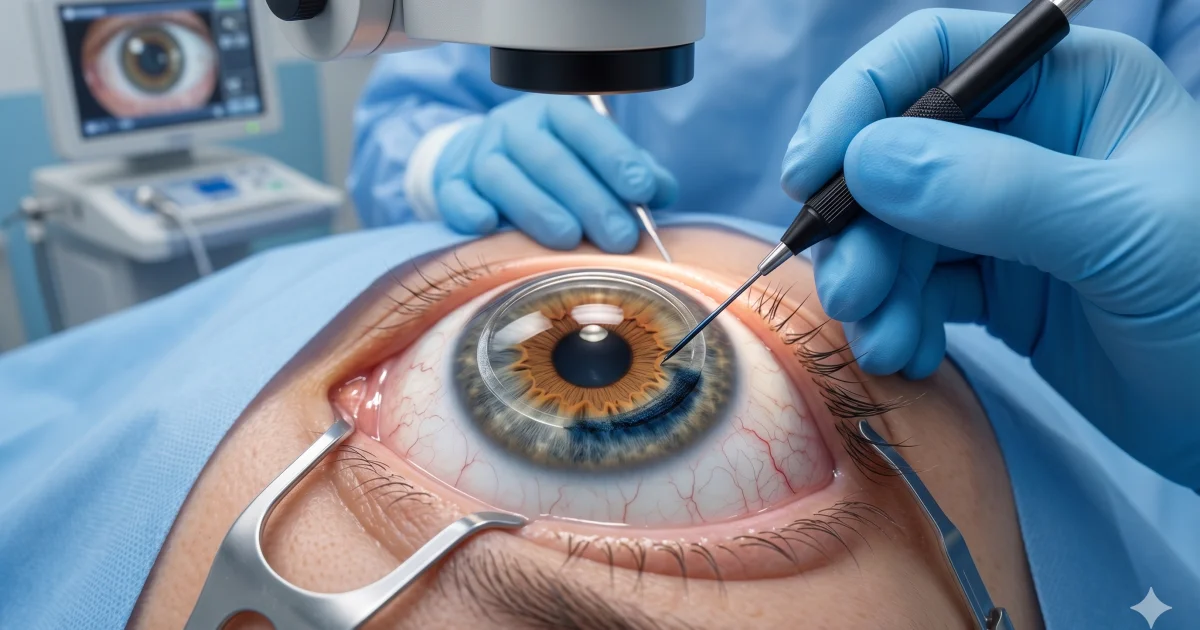
Keratopigmentation After Refractive Surgery

Keratopigmentation after refractive surgery is a common question among patients who have already undergone laser vision correction and now wish to change their eye color permanently. Yoni Gozlan, M.D., Ophthalmic Surgeon specializing in FLAAK keratopigmentation at the Clinique Laser Victor Hugo in Paris 16, explains the compatibility between these two procedures, the essential precautions to follow, the preoperative assessment process, and the results you can expect from keratopigmentation after refractive surgery.
What Is Keratopigmentation After Refractive Surgery?
Keratopigmentation after refractive surgery refers to performing a permanent eye color change using the FLAAK technique on a patient whose cornea has already been treated by LASIK, PRK, or SMILE to correct a visual defect. The procedure involves depositing biocompatible pigments into the corneal stroma using a femtosecond laser, on a cornea whose architecture has been previously modified by a refractive procedure.
This situation requires a thorough evaluation because prior refractive surgery modifies the thickness, curvature, and sometimes the biomechanics of the cornea. Yoni Gozlan, M.D., Former Clinical Fellow in Ophthalmology and member of the SFO and SAFIR, possesses the expertise necessary to analyze each case and determine the feasibility of keratopigmentation after refractive surgery in complete safety. To better understand the procedure itself, please consult our article on FLAAK keratopigmentation surgery.
Keratopigmentation After Refractive Surgery: Is It Compatible?
The good news is that keratopigmentation after refractive surgery is entirely feasible in the majority of cases. Several parameters determine this compatibility:
- Type of refractive surgery performed: LASIK creates a superficial corneal flap, PRK reshapes the corneal surface, and SMILE extracts an intrastromal lenticule. Each of these techniques modifies the cornea differently, which the surgeon must take into account when adjusting the depth of the pigmentation tunnel creation during keratopigmentation after refractive surgery.
- Time elapsed since the refractive procedure: A minimum waiting period of six months to one year is generally recommended to allow complete stabilization of the cornea, refraction, and healing before considering keratopigmentation after refractive surgery.
- Residual corneal thickness: The postoperative pachymetry must be sufficient to accommodate the stromal tunnel in which the pigments will be deposited, without compromising the structural integrity of the cornea. This is a critical factor for keratopigmentation after refractive surgery.
- Refractive stability: The visual correction obtained through refractive surgery must be stable, with no regression or significant changes, to ensure that keratopigmentation after refractive surgery will not disrupt the achieved visual outcome.
Dr. Gozlan systematically verifies all of these criteria during the initial consultation for keratopigmentation after refractive surgery. To learn about situations that may be incompatible, please consult our page on contraindications to FLAAK keratopigmentation.
The Preoperative Assessment for Keratopigmentation After Refractive Surgery
The preoperative assessment is of paramount importance for patients who have already undergone refractive surgery. This evaluation is more thorough than for an eye that has never had any intervention, and it is essential for safe keratopigmentation after refractive surgery:
Step 1: Topographic and tomographic analysis for keratopigmentation after refractive surgery
Corneal topography and anterior segment optical coherence tomography (OCT) allow precise mapping of the residual corneal thickness across the entire surface. In a patient who has undergone LASIK, the surgeon identifies the exact position of the flap and measures the residual stromal bed. In the case of PRK, the remodeled anterior stromal thickness is quantified. These measurements determine the optimal depth for creating the pigmentation tunnel with the femtosecond laser during keratopigmentation after refractive surgery.
Step 2: Biomechanical evaluation before keratopigmentation after refractive surgery
Corneal biomechanics are analyzed to ensure that the cornea retains sufficient structural resistance. Tools such as the ORA (Ocular Response Analyzer) or the Corvis ST evaluate viscoelastic properties. A cornea weakened by refractive surgery could present an increased risk, and this step helps rule out any situation where secondary ectasia could occur. This assessment is essential for safe keratopigmentation after refractive surgery.
Step 3: Complete ophthalmological examination
A comprehensive examination including measurement of visual acuity, refraction, fundus examination, and intraocular pressure measurement is systematically performed. Yoni Gozlan, M.D. ensures that the refractive result is stable and that the eye presents no associated pathology before validating the indication for keratopigmentation after refractive surgery.
Step 4: Shade selection for keratopigmentation after refractive surgery
The patient selects from the 16 available shades the one that best matches their aesthetic expectations. The natural iris color, skin tone, and personal preferences are all taken into account for a harmonious and natural result. This step is identical for all patients undergoing keratopigmentation after refractive surgery, whether or not they have had a previous refractive procedure.
To learn more about this essential step, please consult our dedicated article on the preoperative consultation before FLAAK keratopigmentation.
Keratopigmentation After Refractive Surgery: How the Procedure Works
When the assessment confirms eligibility, keratopigmentation after refractive surgery follows the standard FLAAK protocol, with some specific adaptations:
- Local anesthesia: The procedure is performed under topical anesthesia using anesthetic eye drops, exactly as for a patient who has not had previous surgery. The keratopigmentation after refractive surgery process is painless.
- Stromal tunnel creation: The femtosecond laser creates an annular tunnel within the corneal stroma. In a patient who has undergone LASIK, the surgeon programs the tunnel depth beneath the existing corneal flap to avoid any interaction with the flap interface. After PRK, the depth is adjusted according to the residual stromal thickness. This careful calibration is what makes keratopigmentation after refractive surgery safe and effective.
- Injection of biocompatible pigments: The certified pigments are injected into the stromal tunnel. Their biocompatibility ensures optimal tolerance by the corneal tissues, even on a cornea that has previously been operated on. This is a key advantage of keratopigmentation after refractive surgery using the FLAAK technique.
- Duration and follow-up: The outpatient procedure lasts between 20 and 30 minutes per eye. The patient returns home the same day. A regimen of anti-inflammatory and antibiotic eye drops is prescribed after keratopigmentation after refractive surgery.
Yoni Gozlan, M.D., a pioneer of the FLAAK technique in France, adjusts each laser parameter according to the patient's surgical history to ensure precision and safety during keratopigmentation after refractive surgery.
Results and Vision Preservation After Keratopigmentation After Refractive Surgery
The major concern for patients is whether keratopigmentation after refractive surgery can alter the visual correction previously obtained. The clinical data are reassuring:
- Preservation of visual acuity: FLAAK keratopigmentation does not alter the corneal curvature or the refractive power of the eye. The pigmentation tunnel is created in a peripheral zone of the stroma that does not interfere with the central visual axis. This is a fundamental aspect of keratopigmentation after refractive surgery.
- Stability of the refractive correction: Patients who have undergone LASIK, PRK, or SMILE fully retain the benefit of their laser correction after keratopigmentation after refractive surgery. No regression of corrected myopia, hyperopia, or astigmatism is observed.
- Permanent aesthetic result: The color change achieved through keratopigmentation after refractive surgery is permanent. The intrastromal pigments remain stable over time, providing a natural and long-lasting result.
- Compatibility with a future refractive touch-up: If a refractive surgery touch-up were needed after keratopigmentation, it remains technically feasible under certain conditions. Learn more in our article on refractive surgery after keratopigmentation.
Dr. Gozlan provides rigorous postoperative follow-up to verify visual stability and proper integration of the pigments after keratopigmentation after refractive surgery.
FAQ: Keratopigmentation After Refractive Surgery
Can I have keratopigmentation if I have had LASIK surgery?
Yes, keratopigmentation after refractive surgery of the LASIK type is possible in the vast majority of cases. The surgeon adjusts the stromal tunnel depth so that it is positioned beneath the corneal flap, thereby preserving the integrity of the interface. A complete preoperative assessment with measurement of residual corneal thickness is essential. Yoni Gozlan, M.D. evaluates each situation individually during the consultation for keratopigmentation after refractive surgery.
How long should I wait after refractive surgery before having keratopigmentation?
A minimum waiting period of six months to one year is generally recommended after refractive surgery before proceeding with keratopigmentation. This delay allows for complete corneal healing and stabilization of the refraction. If the visual correction is not yet stable, it is advisable to wait longer before scheduling keratopigmentation after refractive surgery. Dr. Gozlan verifies refractive stability during the preoperative assessment before scheduling the procedure.
Can keratopigmentation after refractive surgery affect my visual correction?
No, FLAAK keratopigmentation does not alter the corneal curvature and does not affect the refractive power of the eye. The pigments are deposited in the periphery of the corneal stroma, outside the central optical zone. Your visual correction from refractive surgery is fully preserved after keratopigmentation after refractive surgery. Dr. Gozlan monitors visual acuity at each follow-up visit.
Is the keratopigmentation after refractive surgery procedure painful on a previously operated cornea?
The procedure is performed under local anesthesia using anesthetic eye drops and remains painless, whether the cornea has been previously operated on or not. Some patients may experience slight discomfort or tearing in the hours following keratopigmentation after refractive surgery, comparable to what is observed in any patient treated by this corneal pigmentation surgery. Eye drops are prescribed to ensure optimal comfort. Yoni Gozlan, M.D. supports each patient throughout the recovery process.
Are there specific risks associated with keratopigmentation after refractive surgery?
The risks are generally comparable to those of keratopigmentation on a non-operated cornea. However, a cornea that is too thin or weakened by refractive surgery could present an increased risk, which is why the preoperative assessment for keratopigmentation after refractive surgery is particularly rigorous. The use of biocompatible pigments and the femtosecond laser significantly reduces complications. Dr. Gozlan informs each patient of the benefits and risks during the consultation.
Is the result of keratopigmentation after refractive surgery permanent?
Yes, the color change achieved through FLAAK keratopigmentation is permanent. The intrastromal pigments are stable over time, regardless of the cornea's surgical history. A touch-up can be considered in the long term if the patient wishes to intensify or adjust the shade. Dr. Gozlan provides long-term follow-up to verify the stability of the result after keratopigmentation after refractive surgery.
What is the cost of keratopigmentation after refractive surgery?
The fee for FLAAK keratopigmentation is the same whether the patient has undergone refractive surgery or not. The cost includes the thorough preoperative assessment, the procedure on both eyes, and the postoperative follow-up for keratopigmentation after refractive surgery. This aesthetic procedure is not covered by national health insurance. Yoni Gozlan, M.D. provides a detailed quote during the initial consultation.
When to Consult Yoni Gozlan, M.D.?
Have you undergone refractive surgery and now wish to permanently change your eye color? Yoni Gozlan, M.D. provides a comprehensive consultation at the Clinique Laser Victor Hugo to evaluate the feasibility of keratopigmentation after refractive surgery and guide you safely toward your desired result.
📍 Consultation at the Clinique Laser Victor Hugo – Paris 16
Yoni Gozlan, M.D. welcomes you at the Clinique Laser Victor Hugo, 27 bis avenue Victor Hugo 75116 Paris for a personalized assessment of your cornea and to determine your eligibility for keratopigmentation after refractive surgery, even if you have had a previous refractive procedure.
Book an AppointmentFurther Reading
If you are considering keratopigmentation after refractive surgery, these additional resources will help you prepare for your consultation:
- Expected results of FLAAK keratopigmentation: discover the aesthetic and visual outcomes you can expect after the procedure.
- Recovery after FLAAK keratopigmentation: everything you need to know about the postoperative course, precautions, and recovery timeline.
- Keratopigmentation risks: is it dangerous?: a detailed analysis of potential risks and the safety measures implemented.