Evolution and Touch-Up of FLAAK Keratopigmentation

Evolution of keratopigmentation: will a touch-up be necessary in the short to long term? This question comes up very frequently among patients considering a permanent eye color change. Yoni Gozlan, M.D., Ophthalmic Surgeon specializing in FLAAK keratopigmentation in Paris 16, explains the behavior of pigments over time, the factors influencing color stability, the situations that may justify a touch-up, and the guarantees offered by the FLAAK technique.
What is the evolution of keratopigmentation and why consider a touch-up?
The evolution of keratopigmentation refers to all the changes that the color obtained after surgery undergoes, from the first postoperative days to several years after the procedure. Understanding this evolution makes it possible to anticipate whether a touch-up will be necessary in the short to long term and to approach the final result with confidence.
FLAAK keratopigmentation surgery is based on the placement of biocompatible pigments into the corneal stroma using a femtosecond laser. This process creates a precise intracorneal tunnel into which the pigment is injected evenly. Yoni Gozlan, M.D., a pioneer of this corneal pigmentation surgery technique in France, emphasizes that the quality of the implantation directly determines the longevity of the result.
Evolution of keratopigmentation in the first weeks: will a touch-up be necessary in the short to long term?
During the days and weeks following the procedure, the evolution of keratopigmentation goes through several natural phases:
- Initial inflammatory phase (Day 1–Day 7): Mild corneal edema may give the impression of a more intense or slightly hazy color. This phase is temporary and does not predict the final result.
- Progressive stabilization (Day 7–Day 30): The edema subsides, the cornea regains its normal transparency, and the shade appears with greater clarity. It is at this stage that the patient begins to appreciate the actual color achieved.
- Consolidation (1 to 3 months): The pigments stabilize within the stromal tunnel. The color sets permanently and reaches its optimal appearance. Postoperative follow-up with Dr. Gozlan verifies this proper consolidation.
During recovery after FLAAK keratopigmentation, it is therefore normal to observe slight color variations. These fluctuations do not mean that a touch-up will be essential. Understanding the evolution of keratopigmentation: will a touch-up be necessary in the short to long term? requires patience during this healing period.
Long-term pigment stability: key factors in the evolution of keratopigmentation
The question of the evolution of keratopigmentation over the long term depends on several fundamental parameters:
- Quality of biocompatible pigments: The pigments used in the FLAAK technique are specifically formulated to resist biological degradation. Their mineral composition ensures strong chemical inertness within the intracorneal environment, significantly limiting the phenomenon of resorption.
- Depth of implantation: The femtosecond laser creates a tunnel at a calibrated depth within the stroma, the avascular zone of the cornea. This absence of blood vessels reduces the risk of migration or phagocytosis of the pigment particles.
- Chosen color and density: Certain shades, particularly the lighter ones, may experience slight fading over the years. The colors chosen in FLAAK keratopigmentation therefore influence the durability of the result and the likelihood of an eventual touch-up.
- Natural iris color: A dark iris requires a higher pigment density to achieve a visible change. This greater density paradoxically contributes to better retention over time.
Yoni Gozlan, M.D. evaluates each of these parameters during the preoperative consultation in order to propose a treatment plan that guarantees the best possible stability. Patients frequently ask about the evolution of keratopigmentation: will a touch-up be necessary in the short to long term? The answer depends largely on these factors.
Evolution of keratopigmentation after several years: will a touch-up be necessary in the short to long term?
Clinical data collected on the FLAAK technique show that the vast majority of patients maintain a satisfactory and stable result over the long term. However, the evolution of keratopigmentation over several years may vary from individual to individual:
- Minimal pigment resorption: In some cases, a very slight decrease in color intensity may occur after 5 to 10 years. This phenomenon, documented in the literature, generally remains subtle and often imperceptible to the naked eye.
- Complete maintenance: Many patients show no detectable change in shade, even after several years. The stability of the operated eye color and resorption over time remains a key strength of the FLAAK technique.
- Evolving aesthetic preferences: Some patients may wish for a touch-up not because of color loss, but to slightly modify the shade or intensify its brilliance. This is then a personal choice rather than a medical necessity.
Dr. Gozlan provides long-term follow-up for his patients to assess any evolution of keratopigmentation and objectively determine whether a touch-up is appropriate. When patients inquire about the evolution of keratopigmentation: will a touch-up be necessary in the short to long term? he provides an evidence-based, individualized answer.
How is a FLAAK keratopigmentation touch-up performed?
When the evolution of keratopigmentation justifies a touch-up, the procedure is essentially identical to the initial surgery:
Step 1: Comprehensive control assessment
Yoni Gozlan, M.D. performs a complete corneal examination including topography, pachymetry, and biomicroscopy. This assessment verifies corneal integrity, quantifies any pigment resorption, and confirms the feasibility of the touch-up in complete safety.
Step 2: Targeted pigment reinjection
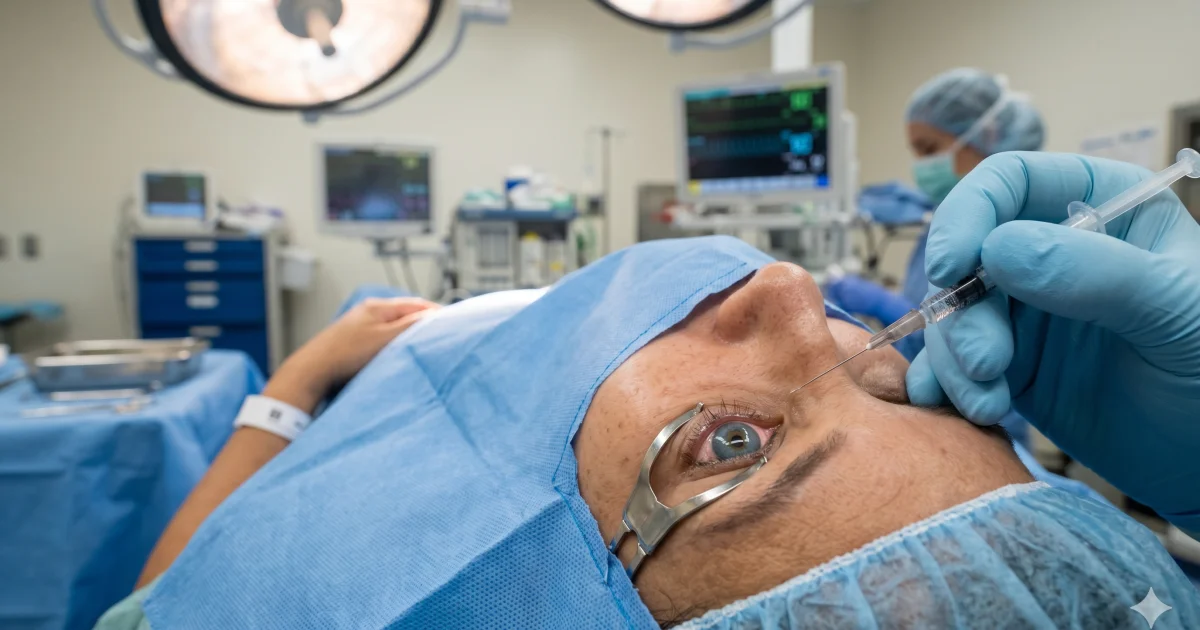
The femtosecond laser reopens the existing stromal tunnel or creates an adjacent one if necessary. The biocompatible pigment supplement is then injected in a targeted manner into the areas that have lost intensity. The procedure remains outpatient, under local anesthesia, and takes approximately 20 to 30 minutes per eye.
Step 3: Postoperative follow-up
Recovery after a touch-up is comparable to that of the initial procedure, with anti-inflammatory and antibiotic eye drop treatment for a few days. Visual recovery is rapid and the color result stabilizes within a few weeks.
It is important to note that a FLAAK keratopigmentation touch-up is a controlled and safe procedure, presenting no additional technical difficulty compared to the initial surgery. The evolution of keratopigmentation: will a touch-up be necessary in the short to long term? is ultimately a question that each patient can address with confidence when under expert care.
Preventing the need for a touch-up: Dr. Gozlan's recommendations
To optimize the durability of the result and reduce the likelihood that a touch-up will be needed, Yoni Gozlan, M.D. provides several recommendations regarding the evolution of keratopigmentation:
- Follow the postoperative protocol: Rigorous application of prescribed eye drops and adherence to hygiene guidelines promote optimal healing and proper pigment fixation.
- Protect eyes from UV rays: Wearing quality sunglasses with UV filters reduces the potential photochemical degradation of the pigments, contributing to the longevity of the chosen shade.
- Ensure regular follow-up: Annual ophthalmological check-ups allow for early detection of any changes and timely intervention if a touch-up proves advisable.
- Choose the right shade from the start: A shade suited to the natural iris color and the patient's expectations, selected in consultation with the surgeon, maximizes the chances of a lasting and harmonious result.
These simple measures make it possible to get the most out of FLAAK keratopigmentation and significantly reduce the risk of needing a touch-up in the medium or long term. Patients who carefully follow this guidance regarding the evolution of keratopigmentation: will a touch-up be necessary in the short to long term? often find that no additional procedure is required.
FAQ: Evolution and touch-up of FLAAK keratopigmentation
Is the color obtained through keratopigmentation truly permanent?
Yes, FLAAK keratopigmentation is designed to provide a permanent result. The biocompatible pigments implanted in the corneal stroma are chemically stable and resist biological degradation. However, the evolution of keratopigmentation may lead to very slight fading in some patients after many years. Yoni Gozlan, M.D. informs each patient of this possibility during the initial consultation.
How long after the procedure can a touch-up be considered?
A touch-up can be considered once complete color stabilization has been achieved, approximately three months after the procedure. However, most touch-ups related to resorption are only justified after several years. Dr. Gozlan evaluates the appropriate timing on a case-by-case basis during follow-up consultations. Assessing the evolution of keratopigmentation: will a touch-up be necessary in the short to long term? is part of every follow-up visit.
Is a keratopigmentation touch-up painful?
No, the touch-up is performed under local anesthesia using eye drops, exactly like the initial procedure. Patients feel no pain during the procedure. Mild ocular discomfort may be felt in the following hours, easily relieved by the prescribed treatment. Yoni Gozlan, M.D. ensures optimal patient comfort throughout the procedure.
How many touch-ups can be performed on the same eye?
The number of possible touch-ups depends on corneal thickness and the condition of the stroma. In practice, the FLAAK technique allows one or two touch-ups without difficulty, provided the preoperative assessment confirms feasibility. Dr. Gozlan performs a complete corneal examination before any reintervention to guarantee the safety of the procedure.
Do all 16 available shades have the same durability?
Durability varies slightly depending on the chosen shade. Rich colors such as hazel brown or deep green tend to hold better than very light shades, due to a higher pigment concentration. The evolution of keratopigmentation is therefore influenced by this choice. Yoni Gozlan, M.D. advises each patient on the shade offering the best balance between aesthetics and longevity.
Is the touch-up included in the initial price?
The pricing conditions for a possible touch-up are discussed during the preoperative consultation. Each case being unique, Dr. Gozlan prepares a personalized quote in complete transparency. It is recommended to inquire directly with the secretariat of the Clinique Laser Victor Hugo for precise financial details.
Does a touch-up affect vision or corneal health?
No, a FLAAK keratopigmentation touch-up does not affect visual acuity or corneal health when performed under appropriate conditions. The pigments are placed in an area of the stroma that does not participate in light refraction. Yoni Gozlan, M.D., Former Clinical Fellow in Ophthalmology and member of the SFO and SAFIR, performs each touch-up with the same safety standards as the initial procedure. The evolution of keratopigmentation: will a touch-up be necessary in the short to long term? should never be a source of concern when the procedure is performed by an experienced specialist.
When to consult Yoni Gozlan, M.D.?
Would you like to learn more about the evolution of keratopigmentation and determine whether a touch-up will be necessary in the short to long term? Yoni Gozlan, M.D. provides a comprehensive consultation including a thorough corneal assessment to evaluate the stability of your result and offer personalized advice.
📍 Consultation at Clinique Laser Victor Hugo – Paris 16
Yoni Gozlan, M.D. welcomes you at Clinique Laser Victor Hugo, 27 bis avenue Victor Hugo 75116 Paris to evaluate the evolution of your keratopigmentation, verify the stability of the color obtained, and determine whether a touch-up is indicated.
Book an AppointmentFurther reading
To better understand the evolution of keratopigmentation and confidently prepare your project, the following resources will help you get ready for your consultation:
- Stability of the operated eye color and resorption over time: everything you need to know about the behavior of corneal pigments over the years.
- Expected results of FLAAK keratopigmentation: discover the aesthetic and functional results you can expect after the procedure.
- Pre-operative consultation before FLAAK keratopigmentation: how the comprehensive assessment prior to any procedure is conducted.