Wearing colored contact lenses every day: what are the risks for your eyes?
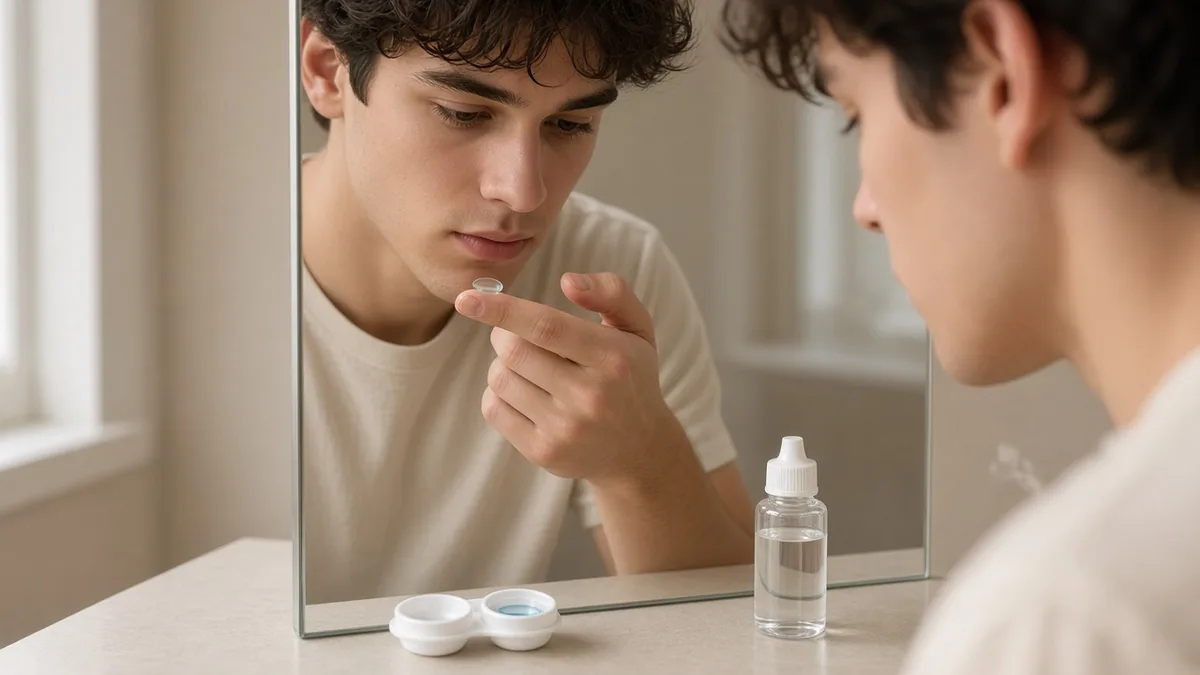

Do you put in your colored contact lenses every morning, the way others put on make-up or glasses? You are not alone. But wearing colored contact lenses every day is not the same as wearing them for one evening: your eyes carry them for hours a day, month after month. Dr Yoni Gozlan, ophthalmic surgeon in Paris 16, reviews the real risks, what studies and health authorities say, and the simple rules that reduce those risks. No scare tactics: when properly chosen and cared for, colored contact lenses are worn without problems by most people who follow the rules.
Key points
- In Europe, non-corrective colored lenses fall under the medical devices regulation.
- The main risk is keratitis, an infection of the cornea. It remains rare in wearers who follow the rules, but it is much more frequent when lenses are worn during sleep.
- Colored lenses bought outside eye care professionals are more often linked to serious infections.
- On some lenses, the pigment sits on the surface, which may increase discomfort and inflammation.
- Pain, redness, light sensitivity or blurred vision: take your lenses out and see a doctor promptly.
Colored contact lenses are regulated devices
Even without correction, a colored lens is not a fashion accessory. In Europe, non-corrective contact lenses are among the products "without an intended medical purpose" covered by Regulation (EU) 2017/745 on medical devices. Their common specifications have applied in full since 22 June 2023, as the French medicines agency ANSM points out: any new product placed on the market must carry a CE marking under this regulation.
The text also lists the risks manufacturers must control: reduced availability of tears and oxygen to the cornea, possible visual disturbance, poor hygiene, and the lack of a prior fitting by an ophthalmologist, optometrist or specialist optician. In the United States, the FDA takes the same line: decorative lenses are medical devices that require a prescription, because they are not "one size fits all".
Wearing colored contact lenses every day: what happens on the eye's surface
A lens covers the cornea, which gets most of its oxygen from the air and from tears. With daily, prolonged wear, some people notice dryness, red eyes or discomfort at the end of the day, especially in front of screens or in dry air.
Colored contact lenses have one particular feature: the pigment. Several studies have looked at where it sits:
- In a 2020 study of 19 cosmetic lenses from six manufacturers, a clear layer covering the pigment was found for only one manufacturer; for the others, the pigment was on the surface or just beneath it.
- A 2016 study in 30 wearers compared, after 8 hours of wear, clear lenses, tinted lenses with enclosed pigment and tinted lenses with surface pigment. The latter led to more inflammation markers, redness and discomfort. Clear lenses were better tolerated than both types of tinted lenses.
- A 2015 laboratory study found a rougher surface on cosmetic lenses than on standard lenses from the same manufacturer, with more bacteria attached, mainly on the tinted zone.
These findings do not mean that every colored lens is dangerous. They explain why the choice of model, professional fitting and wearing time matter so much.
The main risk: keratitis
Infectious keratitis is an infection of the cornea by bacteria, amoebae or, more rarely, fungi. It is the serious complication of contact lenses, corrective or colored, because it can leave a scar and reduce vision.
It helps to keep the numbers in mind. In a large Australian study (Ophthalmology, 2008), keratitis affected about 2 in 10,000 daily-wear soft lens users per year, compared with almost 20 in 10,000 among those who slept in their lenses. The main risk factors were overnight wear, poor case hygiene, smoking, buying lenses online and less than six months of experience.
Colored contact lenses add one more factor: how they are obtained. In a study carried out in 12 French university hospitals between 2007 and 2009, 32 of the 256 lens-related keratitis cases (12.5%) involved cosmetic lenses. Their wearers were younger, had worn lenses for a shorter time, had rarely obtained them from a professional and had rarely been taught how to care for them. At the end of treatment, 60% of them had a visual acuity below 20/200, compared with 13% of corrective lens wearers.
Colored lenses bought outside the professional channel: a risk of their own
According to the AAO, the FDA analyzed more than 300 cosmetic lenses: 60% of counterfeit lenses and 27% of unapproved lenses showed microbial contamination. The FDA also points out that a poorly fitted lens can scratch the cornea and cause an ulcer, conjunctivitis or loss of vision. The message is clear: buy your colored contact lenses from an eye care professional, after a fitting, and never at a market, a costume shop or on a website that asks nothing about your eyes.
How to wear colored contact lenses every day while limiting the risks
The recommendations of the AAO, the FDA and the CDC come down to a few rules:
- wash your hands with soap and dry them before every handling;
- never sleep in your lenses unless your eye doctor says otherwise;
- never let your lenses come into contact with water: tap, shower or pool;
- use fresh solution every time, without topping up the old one;
- clean the case, let it air-dry open and replace it at least every three months;
- follow the planned wearing and replacement schedule, and never share your lenses;
- keep a pair of glasses for days when your eyes need a rest;
- have your eyes checked at least once a year.
Signs that mean your colored contact lenses must come out
Take your colored contact lenses out immediately and see an ophthalmologist quickly if you have redness, pain, watering, unusual light sensitivity, blurred vision, discharge or swelling. The FDA stresses that a bacterial infection can progress very fast: prompt treatment changes the outcome. Bring your lenses and their case to the appointment.
When you have had enough of colored contact lenses
Some people tolerate their colored contact lenses less and less, or grow tired of the daily routine. Other options exist, each with its own benefits and risks. We compare them in colored contact lenses or keratopigmentation: which to choose? and in our article on options for a lasting eye color change. Keratopigmentation is surgery on the cornea, considered permanent: it is decided after a full assessment and clear information about its risks.
FAQ: colored contact lenses every day
Can I wear colored contact lenses every day?
Yes, if your colored contact lenses were fitted by an eye care professional, the model is designed for that use and hygiene rules are followed. A pair of glasses is still useful to rest your eyes.
How many hours a day can I keep colored lenses in?
It depends on the model and on your eyes. Follow the wearing time given by your eye doctor or optician, and take them out as soon as your eyes become red or uncomfortable.
Are daily disposable colored lenses safer?
They avoid case and solution care, a frequent source of mistakes. But they need the same precautions: clean hands, no water, and never wear them while sleeping.
Can I sleep in colored contact lenses?
No, unless your eye doctor tells you otherwise. Wearing lenses during sleep multiplies the risk of keratitis.
How do I know my colored lenses are authorized in Europe?
Check for the CE marking and an instruction leaflet, and buy them from an eye care professional. If in doubt, ask your eye doctor.
Sources
- ANSM, Common specifications for products without an intended medical purpose (Annex XVI) (in French).
- Commission Implementing Regulation (EU) 2022/2346, Annex II: contact lenses.
- U.S. FDA, Colored and Decorative Contact Lenses: A Prescription Is A Must.
- American Academy of Ophthalmology, Cosmetic Contact Lenses: Potential Threat to Vision Health, 2025.
- CDC, Preventing Eye Infections When Wearing Contacts, 2025.
- Stapleton F et al. The incidence of contact lens-related microbial keratitis in Australia. Ophthalmology. 2008;115(10):1655-62.
- Sauer A, Bourcier T. Microbial keratitis as a foreseeable complication of cosmetic contact lenses: a prospective study. Acta Ophthalmol. 2011;89(5):e439-42.
- Jung JW et al. Effects of Pigment Location in Tinted Contact Lenses on the Ocular Surface. Optom Vis Sci. 2016;93(8):997-1003.
- Korde V et al. Identifying Pigment Enclosure in Cosmetic Contact Lenses. Eye Contact Lens. 2020;46(4):228-233.
- Ji YW et al. Comparison of surface roughness and bacterial adhesion between cosmetic contact lenses and conventional contact lenses. Eye Contact Lens. 2015;41(1):25-33.
Further Reading
- Colored contact lenses or keratopigmentation: which to choose?
- How to Change Your Eye Color: Every Option in 2026
- Contact Lenses After FLAAK Keratopigmentation
This article is for general information. It does not replace a medical consultation: if you have symptoms, remove your lenses and see an ophthalmologist.