Ocular Anesthesia for FLAAK Keratopigmentation: What to Expect
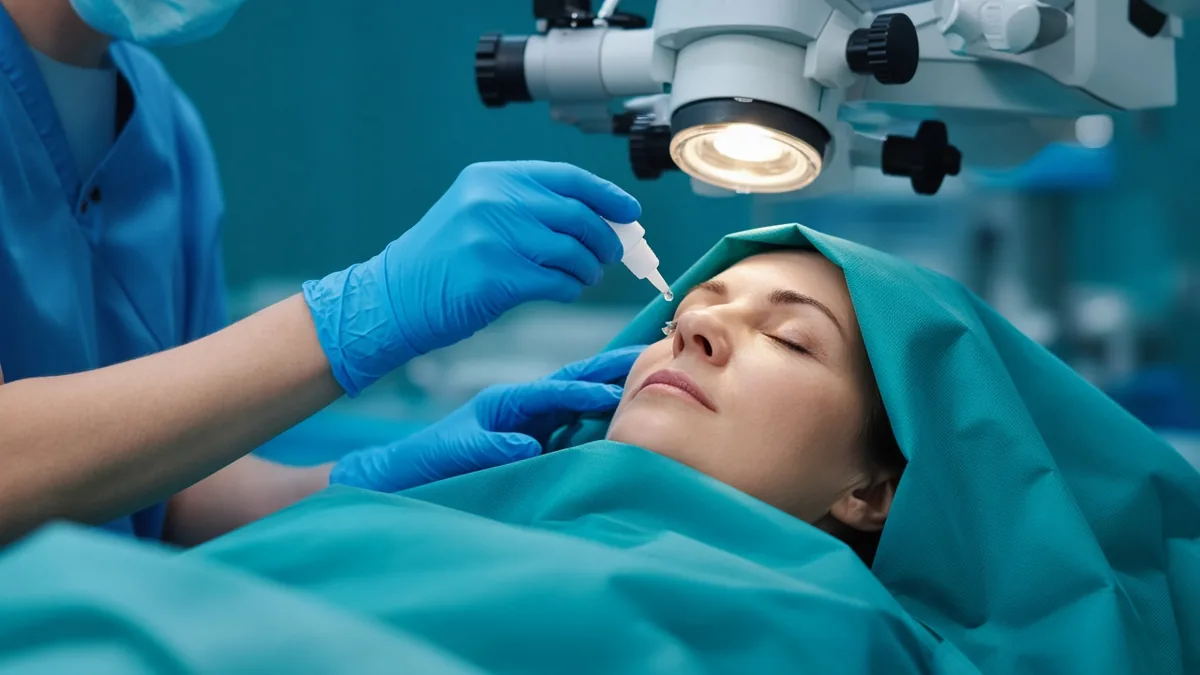

"How will you numb my eye?" Behind that question there is often the image of a needle coming towards the eye. For FLAAK keratopigmentation, ocular anesthesia is much simpler: it is done with eye drops, without any injection and without general anaesthesia. Yoni Gozlan, M.D., ophthalmic surgeon in Paris, who has performed more than 2,000 FLAAK procedures over more than 10 years, explains how it works, what you actually feel, and what it does not take away.
Ocular anesthesia for keratopigmentation: the key points
- Anaesthesia is given with numbing eye drops: no injection, no general anaesthesia.
- You stay awake and can talk throughout the procedure.
- You usually feel no sharp pain during the procedure, but pressure and glare are common.
- Discomfort is common afterwards, once the drops wear off; it is usually temporary.
- You do not need to fast, but you must come with someone.
How numbing eye drops work
The French National Academy of Medicine describes keratopigmentation as a procedure performed in an operating theatre, without hospital admission, after anaesthetic eye drops have been applied. In practice, a few drops of a local anaesthetic are placed on the eye just before surgery. Within moments they numb the surface of the eye: the cornea and the conjunctiva.
The effect lasts for the duration of the procedure. If needed, Dr Gozlan can add more drops during surgery, for example if you tell him some sensation is coming back.
One important point: these anaesthetic drops are used only in the operating theatre and are never prescribed for home use. Used repeatedly, they slow healing and can damage the cornea. After surgery, discomfort is relieved with the prescribed drops and painkillers, not with numbing drops.
Why eye drops are enough
FLAAK keratopigmentation takes place entirely within the cornea. A femtosecond laser creates a thin ring-shaped tunnel within its thickness, and the pigment is placed inside it, with no stitches. The eye is not opened: the iris, the lens and the retina are not touched. Surface anaesthesia is therefore appropriate, whereas some other eye operations may require an injection around the eye.
Being awake is also useful during surgery: you can follow the simple instructions you are given, mention any discomfort and ask questions. For a step-by-step account, read our article on the operation day step by step.
What you feel during the procedure
Anaesthesia removes sharp pain, not every sensation. This is what patients most often describe:
- pressure on the eye, especially when the laser is positioned;
- glare from the light of the microscope and the laser;
- the feeling of the speculum that keeps the eyelids open, unusual but usually not painful;
- a cool feeling from the drops and rinsing.
How it feels varies from one person to another. If something bothers you, say so: the procedure can be adapted and more anaesthetic added. We also cover this in our article is FLAAK keratopigmentation painful?
After ocular anesthesia: what is normal
When the drops wear off, some discomfort often appears: stinging, a gritty feeling, watery eyes, sensitivity to light. In a survey of 42 patients treated with the FLAAK technique in Paris (BMC Ophthalmology, 2023), 81% reported pain during or after the procedure, and 71% reported tingling. These symptoms were temporary in every case: they had gone within 48 hours for about half of the patients, and when they lasted longer, the median duration was 7 days.
In other words, anaesthesia makes the procedure itself tolerable, but the first days call for a little patience. The prescribed drops, artificial tears and, if needed, a simple painkiller help. Pain that gets worse instead of better is not normal: contact Dr Gozlan straight away. Our article on recovery after FLAAK keratopigmentation covers this period in detail.
On the day: preparing for the anaesthesia
- No need to fast: there is no general anaesthesia or sedation. A light breakfast is recommended.
- Come with someone: your vision stays blurry for a few hours and you must not drive.
- Bring sunglasses for the journey back.
- Mention your medication and allergies during the assessment, as before any procedure.
If you are travelling from another city, it is best to spend at least one night in Paris after surgery. The Hôtel du Bois is directly opposite the Centre Laser Victor Hugo. All the steps are on our page for patients from another city or abroad.
What if I am very anxious?
That is common, and it is not a problem. Say so at the consultation: Dr Gozlan can explain each step in advance or, if you prefer, tell you less. During surgery he talks to you and lets you know before each stage. Knowing what will happen, and that you can mention discomfort at any time, often eases much of the apprehension.
First of all, a full assessment checks whether keratopigmentation is possible for your eyes (see our article on the pre-operative consultation). For a first indication, take our eligibility test and try shades with the colour simulator, then see before-and-after photos and videos of operated patients on our Results and reviews page. The price is €5,500 for both eyes (see the detailed cost). Like any corneal surgery, it carries risks, which are set out in our article on risks, side effects and contraindications.
FAQ: ocular anesthesia and FLAAK keratopigmentation
Is there an injection in the eye?
No. Ocular anaesthesia is given only with eye drops placed on the eye. There is no injection into or around the eye.
Am I put to sleep for keratopigmentation?
No. There is no general anaesthesia: you stay awake, can talk and can mention any discomfort. The eye itself is numbed by the drops.
Will it hurt?
During the procedure you usually feel pressure and glare, without sharp pain. Discomfort, sometimes pain, is common afterwards once the drops wear off. It is usually temporary and eased by the prescribed treatment.
How long do the numbing drops last?
They cover the length of the procedure and can be topped up with more drops if needed. Sensation then returns gradually.
Do I need to fast?
No, since there is no general anaesthesia or sedation. A light breakfast is recommended. Do arrange for someone to accompany you: you must not drive on the day of surgery.
Can I have numbing drops to use at home?
No. Used repeatedly, anaesthetic eye drops slow healing and can damage the cornea. Discomfort in the first days is treated with the prescribed drops and painkillers.
📍 FLAAK keratopigmentation – Centre Laser Victor Hugo, Paris 16
Yoni Gozlan, M.D. operates at the Centre Laser Victor Hugo, 27 bis avenue Victor Hugo, 75116 Paris, during scheduled operating sessions. Have a question about anaesthesia or the procedure? The first exchange can take place remotely.
Book a dateSources
- French National Academy of Medicine, "La kérato-pigmentation des yeux : un essor qui n'est pas sans risques", press release, 18 June 2025.
- Alafaleq M, van Haselen R, Ferrari F. The safety and effectiveness of a novel annular keratopigmentation technique; a cross-sectional survey of patients. BMC Ophthalmol. 2023;23:292.
Further reading
- Is FLAAK keratopigmentation painful?: pain during and after the procedure.
- FLAAK keratopigmentation step by step: the operation day.
- Recovery after FLAAK keratopigmentation: the first days and weeks.
- Pre-operative consultation: the tests before surgery.
This article is for general information only. It does not replace a medical consultation: only an eye examination can assess the benefits and risks in your particular situation.